
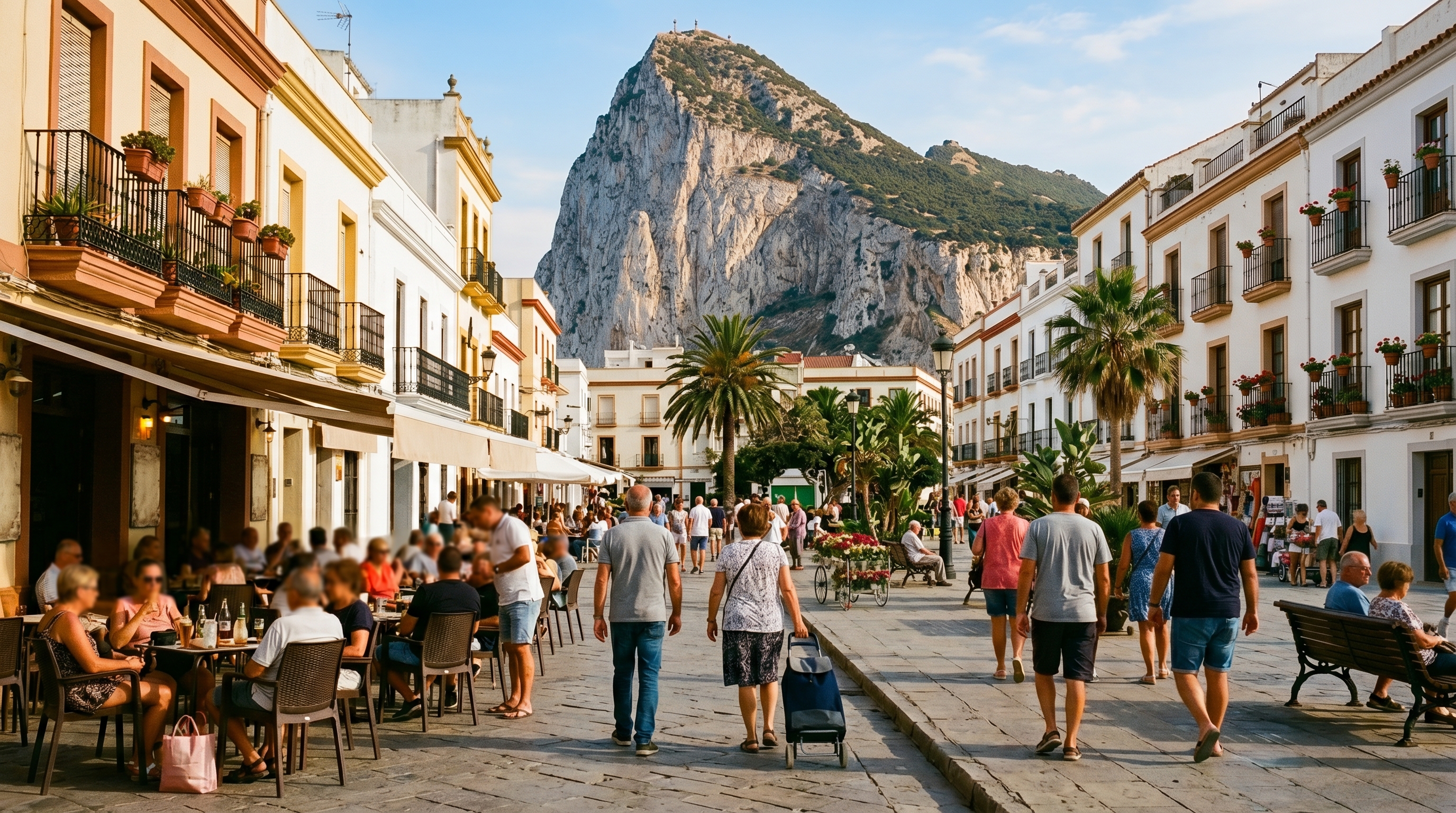
The Gibraltar-Spain treaty provisional application has been delayed from April 2026 to 15 July 2026. The postponement was caused by outstanding legal and linguistic revisions to the treaty text, not a political breakdown. Until July 15, the border at La Línea operates exactly as before, with passport checks continuing at La Verja as normal.
Quick Summary
- The Gibraltar-EU treaty provisional application date is 15 July 2026
- The delay was caused by outstanding legal and linguistic revisions to the treaty text, not a political collapse
- Until July 15, nothing changes at the border: passport checks continue as normal at La Verja
- From July 15, physical border checks move to Gibraltar Airport and the seaport, and the fence dismantling process begins
- For La Línea's roughly 15,000 daily cross-border workers and residents, the practical impacts are still on the way
What Was Supposed to Happen on April 10?
The Gibraltar-Spain border treaty has been years in the making. The deal between the UK, Gibraltar, Spain and the EU covers Schengen area access for Gibraltar, the movement of people and goods across the border, tax and social security rules for frontier workers, and the physical infrastructure of the crossing itself.
April 10 was the target date for "provisional application": the treaty would start being implemented before full parliamentary ratification in every country involved. This is standard EU practice for major agreements while the formal ratification process works through each member state's legislature. The treaty text was published on 26 February 2026, and the EU's Committee of Permanent Representatives (Coreper) gave unanimous approval on 1 April 2026. Provisional application was supposed to follow shortly after, but ran over schedule.
Why Was It Delayed?
The delay was not a political crisis. Coreper endorsed the deal on 1 April 2026 but flagged that legal and linguistic checks had not been fully completed across all official EU language versions. Every clause in an EU treaty must be reviewed and signed off by legal experts in each official language. It takes time, and the process ran over the original window.
Gibraltar's Chief Minister was straightforward about it: the July 15 date provides certainty and additional preparation time. Both the Spanish and UK governments are aligned on the new date. This is a delay, not a cancellation.
La Línea's mayor welcomed the confirmed date but called for caution, highlighting outstanding issues: support for local fishermen, pension rights for cross-border workers, and clearer detail on the economic support package for La Línea itself. Those are real local concerns that reflect how much this town has at stake in getting the details right.
Early social media posts suggested the delay meant the treaty was falling apart. That is not what happened. The legal revision process is bureaucratic and necessary, with nothing to do with Spain or Gibraltar changing their minds. EU member states voted unanimously in favour of the deal. The July 15 date has been formally confirmed.
What Changes for La Linea Residents Before July 15?
Honestly, very little changes in the short term. The border operates exactly as it has been. Passport checks at La Verja continue. The queues you know, shorter early in the morning and longer around the commuter rush hours, stay the same. If you are one of the roughly 15,000 frontier workers crossing daily, your routine is unchanged until July.
One practical note: the EU's Entry/Exit System (EES), which came into use on what was originally treaty implementation day for third-country nationals, is not being applied to Gibraltar's residents or frontier workers at La Verja during this interim period. The Gibraltar authorities confirmed this to avoid two conflicting border regimes running simultaneously. No new biometric scanning requirements apply at La Verja before July 15.
What Actually Happens on July 15?
July 15 is when provisional application starts. The key changes beginning from that date:
- Passport checks move to Gibraltar Airport and the seaport. La Verja is no longer the Schengen frontier. Gibraltar Airport and the port become the entry and exit points for the Schengen area.
- The physical border fence (La Verja) begins to be dismantled. This does not happen overnight, but the process starts on July 15.
- Spain's Policía Nacional will manage Schengen controls on behalf of the EU at Gibraltar's air and sea entry points.
- Frontier workers get a new status. Tax and social security arrangements for people who live in Spain and work in Gibraltar change under the treaty. Both governments are communicating the specific details separately.
What Does This Mean for La Linea Day-to-Day?
The treaty's real impact on La Línea life goes beyond the border queue. Here is what residents can realistically expect to change over 2026 and into 2027:
The Daily Commute
Once checks move to Gibraltar Airport and the seaport, crossing on foot between La Línea and Gibraltar changes fundamentally. Right now, crossing requires presenting your passport every single time. Under the treaty, EU citizens living in the Schengen area, including La Línea residents, will cross freely, similar to crossing any internal EU border. For the town's frontier workers, this is genuinely significant after years of daily queues.
Property and Rents
La Línea has been seeing increased buyer and rental interest since the treaty was announced. The delay has not reversed that trend. Prices for quality properties close to the border have been moving in anticipation. Rental demand from Gibraltar workers considering a move to La Línea is expected to grow once the crossing becomes frictionless. Resale properties in Andalusia attract a flat 7% ITP transfer tax (as of 2021), which remains unchanged by the treaty.
The Local Economy
More foot traffic between Gibraltar and La Línea benefits both sides. La Línea businesses, particularly restaurants, supermarkets, and local services, stand to gain from Gibraltar residents coming across more easily to shop and eat. La Línea has always offered a significant price advantage over the Rock. Once crossing becomes easier, that advantage becomes more accessible to more people.
Tourism
As Gibraltar tourism grows, the spillover into La Línea grows with it. Hotels, restaurants, and short-term rentals in La Línea are seeing increased interest from visitors who want to stay somewhere cheaper while visiting the Rock. The extra time before July gives local businesses a longer runway to prepare for that increased footfall.
Should La Linea Residents Be Worried About the Delay?
No. The three-month extension is frustrating if you were planning around April, but it is not a sign of anything going wrong. The content of the deal is unchanged. The legal machinery needed more time.
If you are a business owner in La Línea, a frontier worker, a property owner, or just someone who lives here and has been watching closely: the direction of travel has not changed. July 15 is the new date. The outstanding issues around fishermen, pension rights, and economic support for La Línea are being pushed hard by local representatives. Use the time to stay informed and prepare.
The Bottom Line
The April 10 date came and went. The border is the same as it was yesterday. But July 15 is confirmed, the deal is intact, and everything that was going to change is still going to change, just a few months later. For La Línea, that means a little more time to prepare for what is coming: a more connected, more accessible town with a lot more going for it than it has had in a very long time.
Frequently Asked Questions
Why was the Gibraltar treaty delayed from April 10?
The delay was caused by outstanding legal and linguistic revisions to the treaty text, a standard bureaucratic process for EU agreements. All official EU language versions must be reviewed before provisional application can begin. This is not a political breakdown. The new confirmed date is 15 July 2026.
Does anything change at the La Linea-Gibraltar border before July?
No. Passport checks at La Verja continue as normal until July 15. The EU's Entry/Exit System (EES) is not being applied to Gibraltar residents or frontier workers at La Verja during this interim period, so no new biometric requirements apply before the treaty takes effect.
What happens to the physical border fence on July 15?
The process of dismantling La Verja begins when provisional application starts on July 15. The physical work takes time and the fence will not disappear overnight, but the legal and political framework for removing it is in place from that date.
How does the treaty affect La Línea residents who work in Gibraltar?
Frontier workers gain significantly. Once checks move to Gibraltar Airport and the seaport, EU citizens from La Línea can cross freely without passport presentation at the land border. Tax and social security arrangements for the roughly 15,000 daily cross-border workers also change under the treaty. Both governments are communicating these details separately.
Will property prices in La Línea go up when the treaty comes into effect?
Market observers generally expect the treaty to support La Línea property prices, particularly for properties close to the border. Prices have already been moving in anticipation of the changes. A sudden large spike is unlikely. The effects are expected to build gradually as practical changes take hold through 2026 and 2027.