
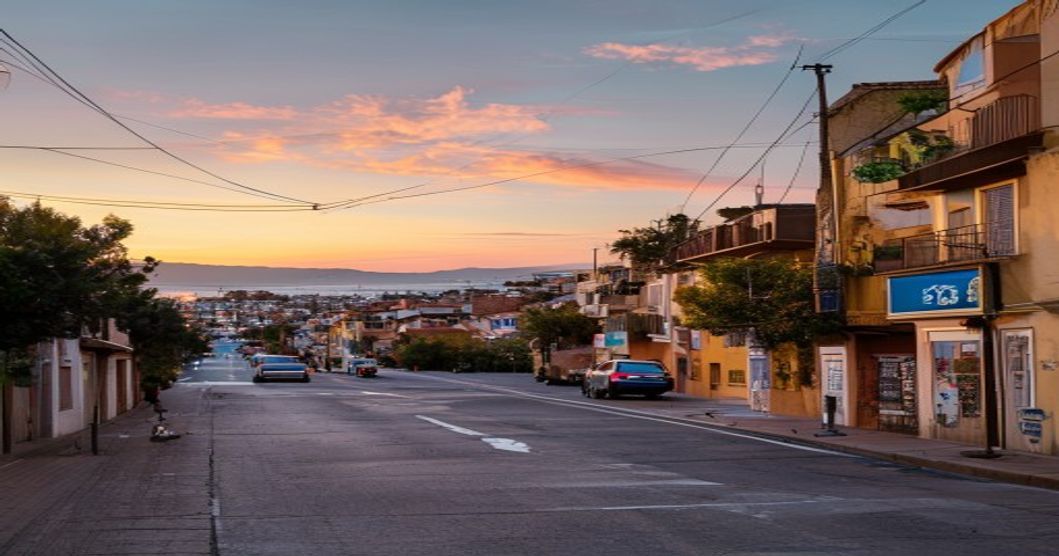
La Linea de la Concepcion has five main barrios with distinct characters and price points. Centro is the most walkable and lively. Campamento sits closest to the Gibraltar border and suits commuters best. Santa Margarita is the young professional's choice. La Atunara is the authentic fishing quarter. Palmones offers the most space for money further out.
Quick Summary
- La Linea has distinct neighbourhoods with different vibes, prices, and lifestyles.
- Centro is the most walkable and lively. Campamento is the best for Gibraltar workers. Santa Margarita suits young professionals and students. La Atunara is the most authentic and affordable. Palmones is furthest out but biggest for money.
- The border treaty enters provisional application on 15 July 2026 and will affect Campamento and Centro most, with rental and property prices expected to rise.
- All areas are affordable compared to Gibraltar, but the difference between barrios is meaningful.
La Linea de la Concepcion is not one place. Like most Spanish cities, it is a collection of barrios that grew up with different characters over different eras. The fishing quarter does not feel like the new residential zone. The student area does not feel like the city centre. And none of it feels like the quiet family streets of Campamento.
If you are thinking about living in La Linea, visiting for a while, or just trying to understand what the city actually is, the barrio you end up in changes everything. This guide walks through each one honestly.
Centro: The Heart of the City
Centro is what most people imagine when they think of La Linea. The main plazas, the cafes spilling onto the street, the tapas bars that get going at 9pm and do not slow down until midnight. It is the most walkable part of the city and the most alive at almost any hour.
The streets in Centro are built around a network of plazas that give the neighbourhood its structure. Plaza de la Iglesia, anchored by the Iglesia de la Inmaculada Concepción, is the historic centre of gravity. From there, Calle Real runs through the commercial heart, with Café Modelo at number 30 one of the older institutions on the strip. Plaza Cruz Herrera connects the bar quarter, where Chaboo Tapas Bar & Lounge draws a crowd for Sunday roast alongside Spanish staples, and Revuelo on Calle Cadalso 6 offers a Galician-influenced Mediterranean menu. For the city's most-reviewed restaurant, Mesón La Casita Asador on Avenida España 4 holds the top spot among roughly 188 restaurants listed on TripAdvisor (as of May 2026). For something more steeped in history, Bar Francis invented the Africano breakfast sandwich that became famous across Cádiz province. El Rincón de Juan near Plaza de la Iglesia is the go-to for serious meat, retinto, jamón, and Iberian pork from owner Juan José Aguilarte.
The Mercado Municipal de Abastos on Calle Isabel La Católica is the city's main covered market and sits at the social heart of Centro life. The Museo Cruz Herrera and the Museo del Istmo are both within easy walking distance. The city's football club, Real Balompédica Linense, known locally as La Balona and founded in 1912, gives Centro its biggest match-day atmosphere when home games come around at the Estadio Municipal de La Línea.
Centro is also the closest barrio to Gibraltar for most pedestrian routes. From the main plaza, you can walk to the border in around 15 to 20 minutes. After the border treaty comes into provisional application on 15 July 2026, that walk becomes a genuine daily commute option rather than a queue lottery.
Rents in Centro are the highest in La Linea. Public listings currently suggest one-bed flats in decent condition run €600 to €700 per month. Two-bed apartments sit at €850 to €1,000. Still dramatically cheaper than Gibraltar, but you are paying the La Linea premium to be in the centre of things.
Noise is the main trade-off. Centro comes alive on weekends. The bar and restaurant scene means Friday and Saturday nights are noisy until well past midnight. If you work early starts or have young children, factor this in carefully.
Campamento: Modern, Quiet, and Border-Adjacent
Campamento is the neighbourhood that makes the most practical sense for anyone commuting to Gibraltar. It sits directly alongside the northern approach to the border crossing, which means many streets are literally a 5-minute walk from the frontier.
The character here is quieter and more residential than Centro. There are more modern builds from the 2000s and 2010s, more underground parking, wider streets, and a noticeably calmer atmosphere. It is where families with Gibraltar connections tend to land because it combines proximity to work with the kind of neighbourhood where children can play outside.
Campamento is where treaty effects will hit hardest. It is already the most sought-after area among Gibraltar workers who have chosen La Linea as their base, and open-border access from 15 July 2026 will sharpen that demand further. Public listings suggest rents currently run €550 to €650 for a one-bed and €750 to €900 for a two-bed. Expect upward pressure as the treaty date approaches.
The trade-off is that Campamento has less traditional street life than Centro or La Atunara. You drive to shops more. The neighbourhood is functional rather than atmospheric. For some people, that is exactly what they want.
Santa Margarita: The Young Professional's Barrio
Santa Margarita has a specific identity in La Linea. It is where young people who cannot quite afford Centro, or do not want the noise, tend to end up. Students, young professionals, people who moved to La Linea from elsewhere in Spain, people who moved back from Gibraltar when rents got too much. It has a community feel that the other barrios do not quite replicate.
The architecture is a mix. Some older blocks, some renovation projects that are slowly improving the visual quality of the area. It is not polished, but it is not rough either. It is a working neighbourhood that has been quietly improving for a few years.
Transport links are good. Bus routes connect Santa Margarita to both the border and the city centre. The walk to Centro is 10 to 15 minutes. The walk to the border is around 20 to 25 minutes, which is longer than Campamento but still entirely manageable for daily commuting.
Rents in Santa Margarita are currently the most accessible of the central areas. Public listings suggest one-beds run €500 to €600 per month and two-beds sit at €700 to €850. The gap with Centro is meaningful over the course of a year.
La Atunara: The Fishing Quarter
La Atunara is old La Linea. It sits at the southeastern corner of the city, near the fishing port, and it has the kind of character that no amount of development can replicate. The streets are narrower. The buildings are older. The population is more rooted. Generations of fishing families have lived in the same streets, and that history is visible on every corner.
The restaurant life in La Atunara reflects that heritage directly. Mesón La Atunara is a long-running fixture of the fishing quarter, and La Marina Atunara operates as a separate genuine port-side restaurant. Gold Indian on Paseo Marítimo 59 adds a different note to the area's eating options. These are not tourist-facing restaurants: they exist because the neighbourhood has always needed them.
Slow change is underway. Property investors and renovation projects have been creeping in, attracted by low prices and genuine character. The demographic is shifting gradually. La Atunara is not going to transform overnight, but the trajectory is upward.
Rents in La Atunara are the lowest of the central areas. Public listings suggest one-beds run €450 to €550 and two-beds sit at €650 to €750. The distance to the border is greater than Centro or Campamento, roughly 20 to 30 minutes on foot, which matters less if you are not commuting to Gibraltar daily.
Palmones and the Outer Areas: Space for Money
Palmones and the Los Barrios area are a different conversation from the barrios above. They sit further from La Linea's city centre, closer to the industrial corridor that runs along the bay. The aesthetic is not charming.
What you get in exchange is significantly more space per euro. Three-bedroom flats that would cost €900 to €1,200 per month in Centro can sometimes be found for €650 to €800 here, based on current area listings. For families who need space, have their own car, and do not need to commute to Gibraltar daily, it can make practical sense.
This is a car-dependent area. Public transport connects to the city centre but frequency is not high. The industrial proximity means it is not a choice driven by quality of life so much as practicality and budget. But for the right person, it is the biggest apartment for the lowest price in the area.
Neighbourhood Comparison at a Glance
| Barrio | Vibe | 1-Bed Rent (approx.) | Best For | Border Distance (walk) |
|---|---|---|---|---|
| Centro | Lively, walkable, urban | €600-€700 | City lovers, night owls, remote workers | 15-20 min |
| Campamento | Quiet, modern, family-friendly | €550-€650 | Gibraltar workers, families | 5-10 min |
| Santa Margarita | Community, young, improving | €500-€600 | Young professionals, students | 20-25 min |
| La Atunara | Historic, authentic, local | €450-€550 | Character seekers, budget renters | 20-30 min |
| Palmones | Practical, spacious, car-dependent | €450-€550 (larger units) | Families needing space, budget-first | 30-40 min |
How the July 2026 Treaty Changes the Neighbourhood Picture
The border treaty enters provisional application on 15 July 2026, and it matters most to the barrios closest to the frontier. Campamento and Centro are the ones that stand to gain most in terms of desirability and incoming demand. La Linea already has around 15,000 people crossing the border daily for work (January 2024 INE), and a friction-free crossing will sharpen demand for accommodation close to the frontier.
Santa Margarita will feel a secondary effect, becoming relatively better value compared to Campamento as that area prices up. La Atunara and Palmones are far enough from the border that the treaty effect on them will be minimal in the short term.
If you are choosing a barrio now with an eye on value retention or rental income, Campamento is the clearest call. If you are choosing based on quality of life and you will be here for a while, Centro's urban energy is hard to beat. And if you are on a budget and do not need to cross the border daily, La Atunara still offers the best value character in the city.
For a detailed breakdown of rental prices across all La Linea's neighbourhoods, lalinearent.com has a full per-area comparison with current listing ranges.
Which barrio in La Linea is safest?
La Linea is a normal Spanish city and the barrios described here are all safe for everyday life. Centro and Campamento have the highest foot traffic and are the most active. La Atunara has a tight-knit local community. Standard urban awareness applies throughout.
Is La Linea a good place to live for a remote worker?
Yes. Centro and Santa Margarita both work well for remote workers. The cost of living is significantly lower than anywhere in the UK or northern Europe, the weather is excellent from April to November, and Malaga airport is around 90 minutes away by bus for travel days.
How good is the public transport between La Linea barrios?
Within the city, buses connect the main areas but frequency is typically every 30 to 60 minutes. Centro is walkable to most things. Campamento is well-connected by bus to Centro. For the outer areas like Palmones, a car makes life significantly easier.
Are there good schools in La Linea?
Yes. La Linea has both Spanish state schools and several concertado (semi-private) schools. Families moving from Gibraltar often continue sending children to school in Gibraltar for continuity, which the border location makes practical. After 15 July 2026, that daily crossing for children will also become easier.
Which barrio has the best restaurants and nightlife?
Centro, by some distance. The plazas and surrounding streets have the highest density of tapas bars, restaurants, and late-night spots. La Atunara also has excellent local restaurants near the fishing port, including Mesón La Atunara and La Marina Atunara, worth seeking out specifically for port-side dining.